

Skin health4 min read
A simple skincare routine is often the most effective one
A consistent routine does not need ten steps. Begin with the essentials, understand what your skin needs, and add active ingredients with care.
Read articleThe Dermatique journal
Thoughtful, practical reading to help you understand common concerns, make informed choices, and know when professional care may help.
A consistent routine does not need ten steps. Begin with the essentials, understand what your skin needs, and add active ingredients with care.
Read article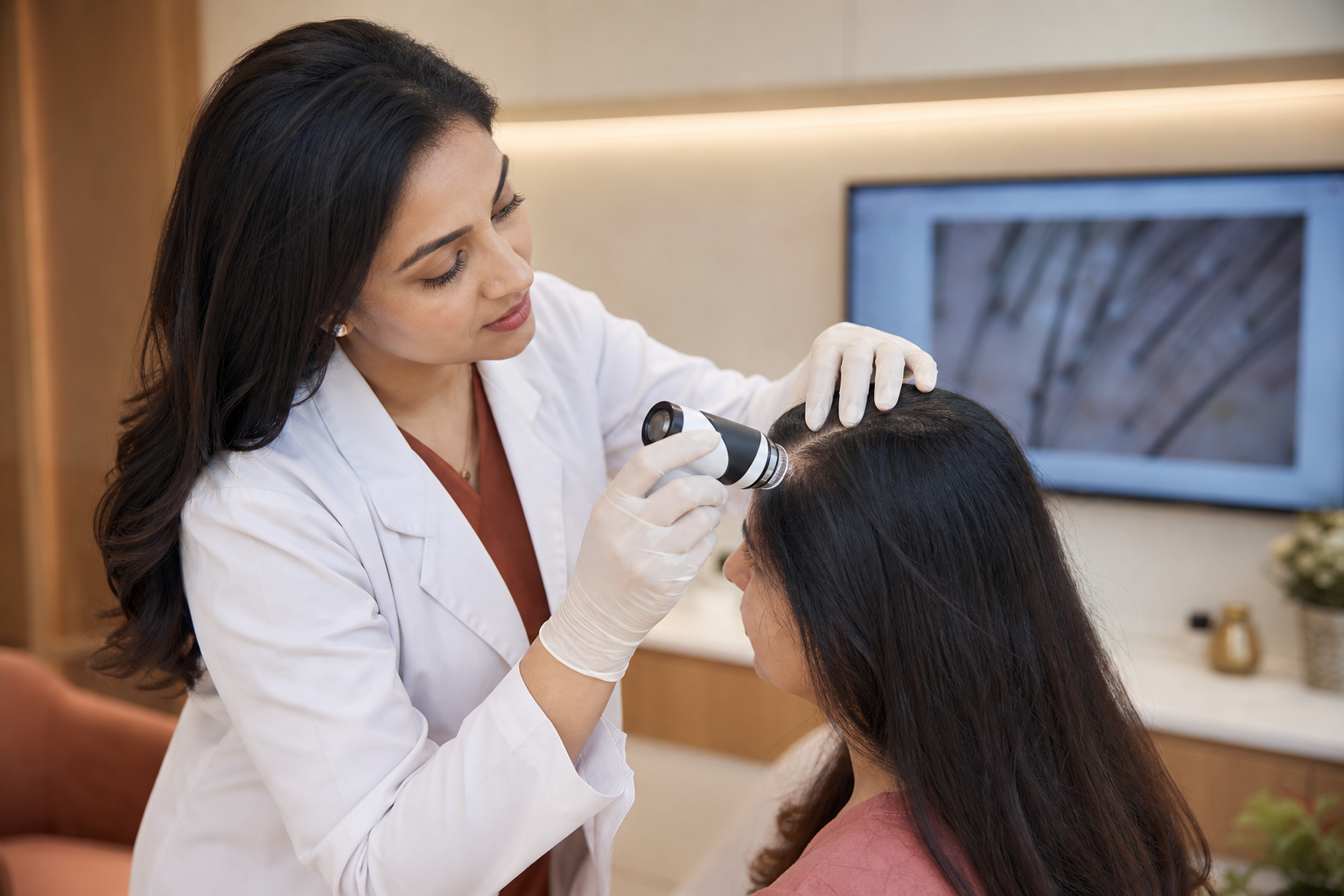
Some daily shedding is expected, but a sudden increase, visible thinning, or scalp symptoms can signal that a closer assessment is worthwhile.
Read article
Pigmentation is influenced by more than sunlight alone, but thoughtful daily protection helps treatment work more effectively and reduces repeated darkening.
Read articleFrom our journal
A consistent routine does not need ten steps. Begin with the essentials, understand what your skin needs, and add active ingredients with care.
Skincare can become confusing when every new ingredient is presented as essential. In practice, a dependable routine usually begins with three basics: gentle cleansing, appropriate moisturising, and daily sun protection. These steps support the skin barrier and create a stable foundation before targeted products are introduced.
Choose a cleanser that removes sunscreen, makeup, and excess oil without leaving the skin tight or uncomfortable. Follow with a moisturiser suited to your skin type. Even oily or acne-prone skin may benefit from lightweight hydration, because irritation and dryness can make a routine harder to maintain.
During the day, use a broad-spectrum sunscreen and reapply when prolonged outdoor exposure, sweating, or water contact makes it necessary. Sunscreen supports the management of pigmentation and photoageing, but it works best alongside shade, protective clothing, and sensible sun habits.
If you want to address acne, uneven tone, or signs of ageing, introduce one active product at a time. Starting several products together makes irritation more likely and makes it difficult to identify what is helping. Persistent symptoms, painful acne, sudden changes, or scarring deserve a dermatology consultation rather than repeated trial and error.
Some daily shedding is expected, but a sudden increase, visible thinning, or scalp symptoms can signal that a closer assessment is worthwhile.
Hair naturally moves through growth, transition, and resting phases, so finding strands on a brush or during washing is not automatically a cause for concern. What matters is a noticeable change from your usual pattern—particularly if shedding continues for several weeks or is accompanied by reduced density.
Temporary shedding may follow fever, significant illness, surgery, rapid weight change, emotional stress, or nutritional disruption. Because the hair cycle responds slowly, increased shedding can begin weeks or months after the trigger. Pattern hair loss, alopecia areata, scalp inflammation, and breakage can look similar at first but require different approaches.
A consultation considers the timing and pattern of hair loss, family history, medicines, diet, recent health changes, styling practices, and scalp symptoms. Examination may be enough to guide care. Blood tests or other investigations should be selected only when the history and examination suggest that they could clarify an underlying cause.
Seek earlier advice if you notice distinct bald patches, scalp pain, marked redness or scaling, loss of eyebrows or eyelashes, or rapidly progressing thinning. Avoid starting multiple supplements without guidance: more is not always better, and excess levels of some nutrients can be unhelpful.
Pigmentation is influenced by more than sunlight alone, but thoughtful daily protection helps treatment work more effectively and reduces repeated darkening.
Dark marks can develop after acne, irritation, injury, hormonal change, or chronic sun exposure. Melasma and post-inflammatory hyperpigmentation are especially prone to returning, which is why successful care usually combines an accurate diagnosis, trigger reduction, and a realistic long-term plan.
Broad-spectrum sunscreen is an important part of that plan. Apply it generously to exposed skin and reapply according to your activity and time outdoors. Hats, shade, and avoiding intense midday exposure add useful protection. For some pigmentation concerns, a dermatologist may discuss whether a tinted sunscreen is appropriate.
More aggressive treatment is not always faster. Over-exfoliation, frequent product changes, or unsuitable procedures can irritate the skin and make pigmentation appear darker. Targeted ingredients and in-clinic treatments should be selected for your skin type, the cause of pigmentation, and your tolerance for downtime.
Improvement is usually gradual rather than immediate. Photographs taken in similar lighting can make progress easier to judge. If a mark is changing in shape, colour, size, or behaviour, it should be examined instead of being treated as ordinary pigmentation.
Personal guidance
Articles can offer general guidance, but they cannot replace an individual assessment, diagnosis, or treatment plan.